13 hr
Hallstatt & Salzkammergut Day Tour from Vienna
- Expert local guide
- Small group
- Skip-the-line access
- Free cancellation
Hallstatt Day Tour From Vienna — Alpine Village & Lake Access
UNESCO heritage on Hallstätter See, four-hour drive through the Salzkammergut
Compare fares, pick the fit — all bookings are mobile-voucher and eligible for free cancellation where shown.
13 hr
13 hr
12 hr
Selecting the right ticket for your hallstatt day tour from vienna depends on whether you wish to explore the historic salt mine or simply enjoy panoramic views from the funicular. Visitors should note that while the village itself is free, the primary mountain attraction requires a ticket to access the elevated areas.
| Funicular Only Skywalk Access |
Top pick Salt Mine Combo Full Experience |
|
|---|---|---|
| Access Level | Mid-level platform | Summit Salt Mine & Skywalk |
| Wait Time | 5–15 minutes | 30–60 minutes (guided tour) |
| Inclusions | Round trip funicular | Funicular, mine tour, Skywalk |
| Best For | Photographers | History enthusiasts |
| See tickets & prices |
Verdict: For most first-time visitors, the Salt Mine Combo represents the most comprehensive way to experience the landmark while enjoying the alpine vistas.
Worth it for scenery lovers, less so for extended exploration
A Hallstatt day tour from Vienna delivers one of Austria's most photogenic alpine villages—lakeside charm, pastel facades, and the Salzkammergut's dramatic peaks—without the logistics of self-driving the winding mountain roads. Entry to the village itself is free, though the salt mine and other attractions charge separately. Most organized departures cover transport, a guide, and three to four hours in Hallstatt, often paired with stops at nearby alpine lakes or Salzburg. The trade-off is time: you'll spend roughly four hours each way on the road for a concentrated slice of the village during peak midday hours when tour buses converge. If your Vienna itinerary has room for a long day and you prioritize the iconic lakeside postcard over deep exploration, the convenience justifies the cost. Independent travelers seeking quieter morning light or overnight stays will find better value renting a car or taking the train.
Bottom line: Book a Hallstatt day tour from Vienna if the convenience of a single-day alpine escape outweighs the compressed visit window and midday crowds.
They complement different travel styles; most visitors who prioritize convenience choose the hallstatt day tour from vienna, while those seeking a relaxed pace prefer a Salzburg-based excursion.
|
Top pick Vienna Tour |
Salzburg Base | |
|---|---|---|
| Travel time (one way) | 3.5–4 hours | |
| Transit mode | Coach or train | |
| Time in village | 2.5–3 hours | |
| Cost estimate | 75–99 EUR | |
| Best for | Vienna-based travelers | |
| Entrance fee | 0 EUR (village) | |
| See tickets & prices |
Verdict: The hallstatt day tour from vienna is ideal for those with limited time in the capital, whereas using Salzburg as a hub offers a significantly shorter commute and more flexibility for your hallstatt day tour from vienna tours.
Hand-picked experiences loved by thousands of travelers
12 hours
Free Cancellation
Journey through alpine scenery to Austria's iconic lakeside village with a castle stop and free exploration time
13 hours
Free Cancellation
Journey through Austria's fairytale villages, alpine lakes, and Mozart's birthplace on this full-day escape
14 hours
Free Cancellation
Journey through Austria's most picturesque landscapes to two iconic destinations in one unforgettable day
13 hours
Free Cancellation
Small-group journey through Austria's alpine jewel and Mozart's birthplace with scenic mountain views
12 hours
Free Cancellation
Journey through Austria's Lake District to the fairy-tale alpine village of Hallstatt with expert guide
13 hours
Free Cancellation
Discover Austria's alpine jewel on a full-day excursion to a UNESCO-listed lakeside village and stunning mountain landscapes
13 hours
Free Cancellation
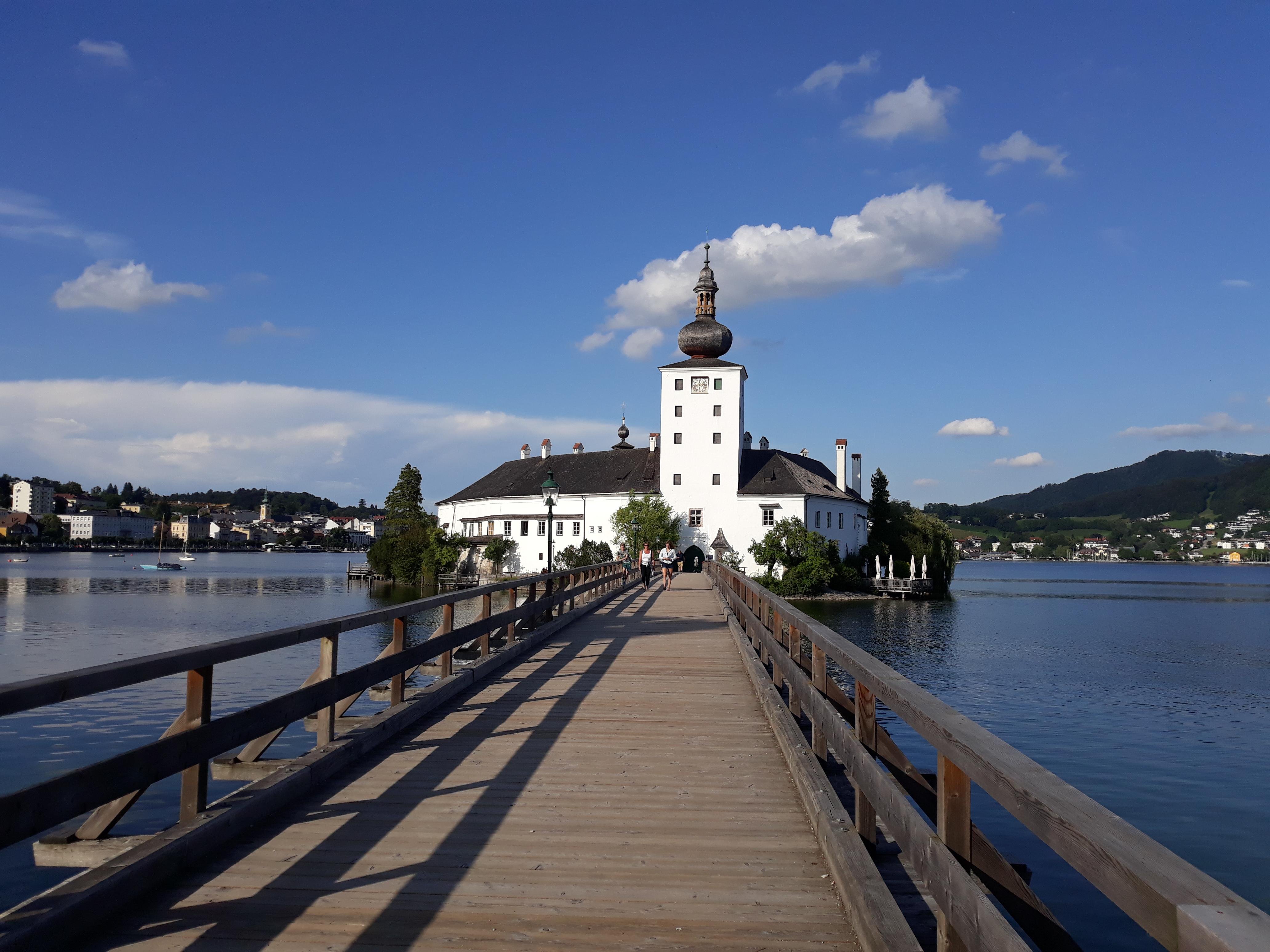
Journey through Austria's Alpine lake district to explore fairytale Hallstatt and historic Ort Castle
13 hours
Free Cancellation
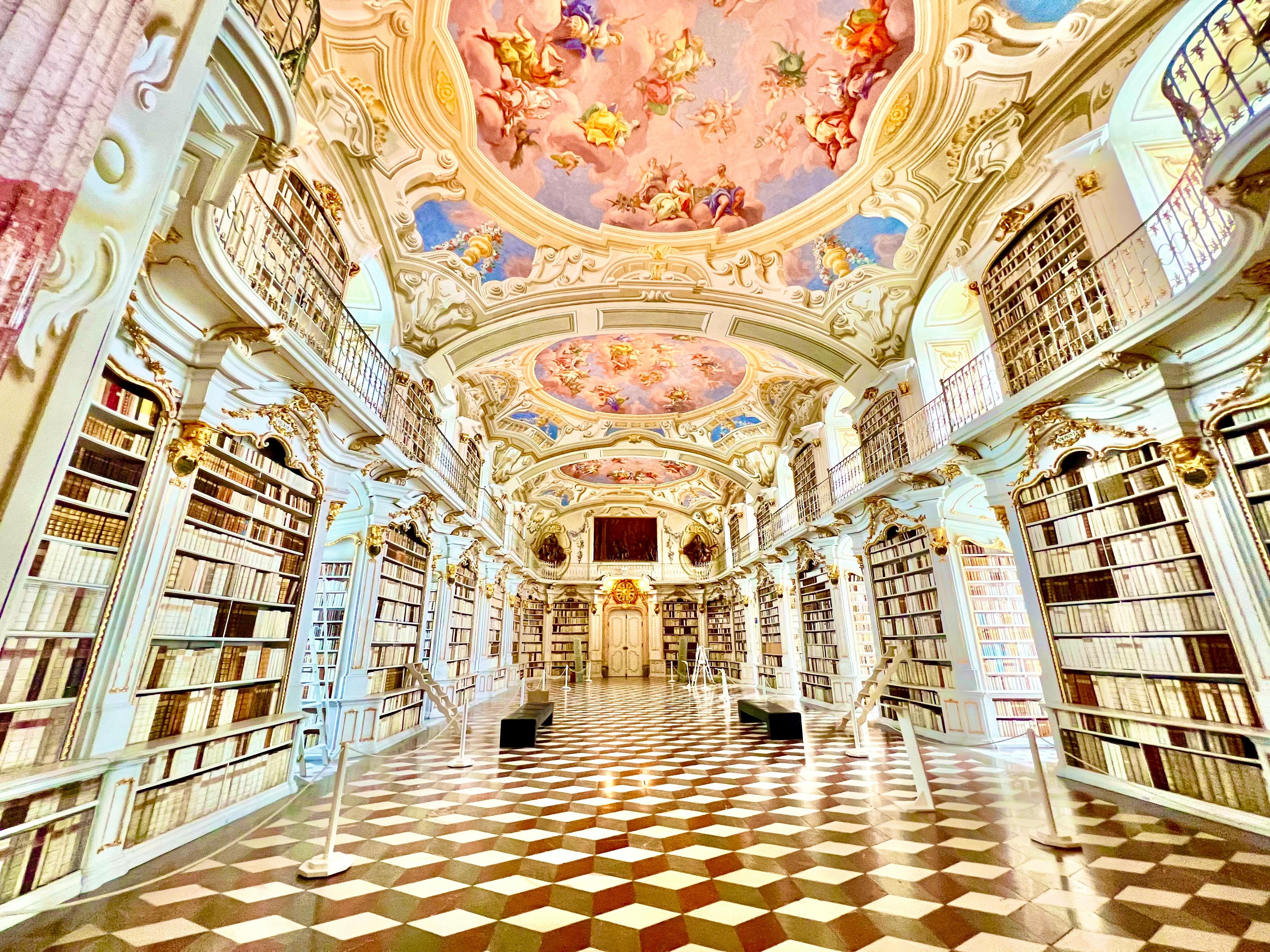
Journey through Austria's heritage: baroque splendor, alpine lakeside charm, and the world's grandest monastic library
Orientation near the main bus terminal
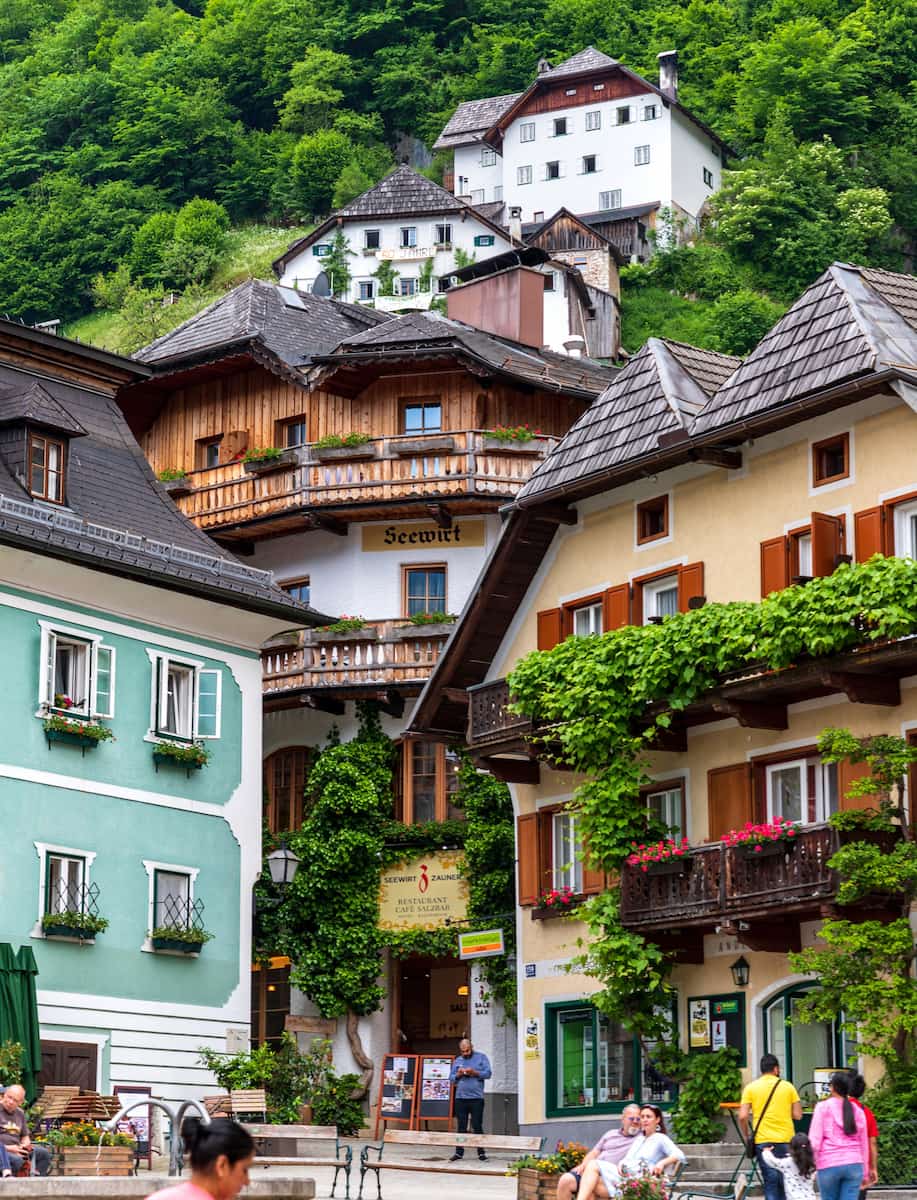
Exploring the traditional alpine architecture
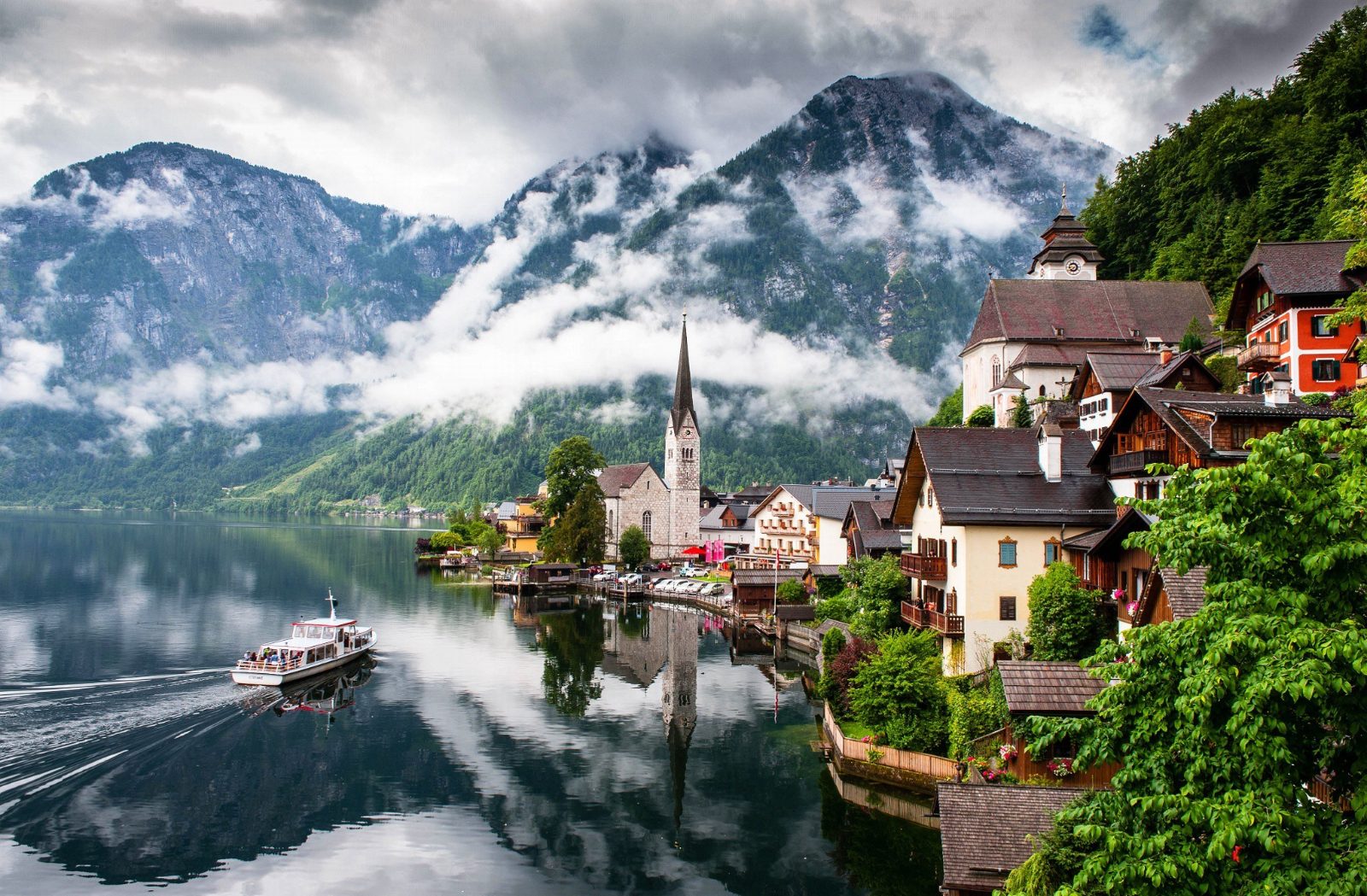
Walking along the lakefront for mountain vistas
Gathering at the designated pickup zone
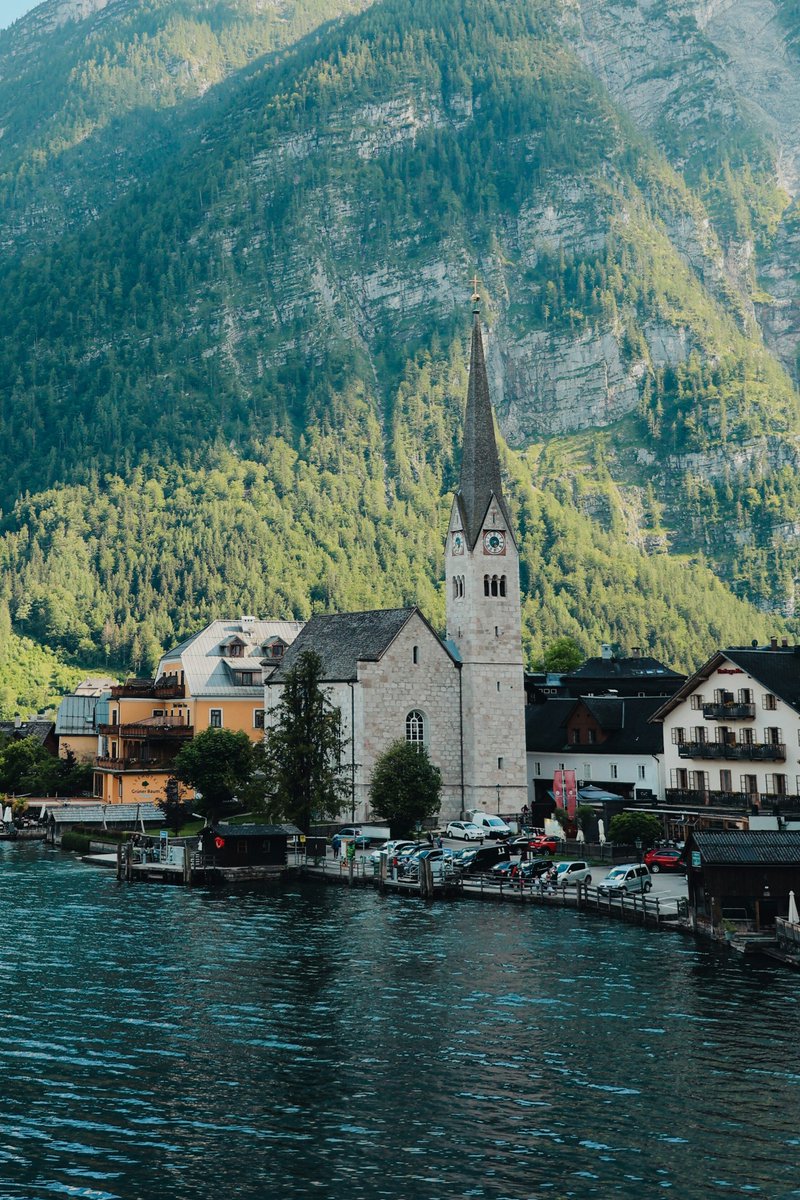
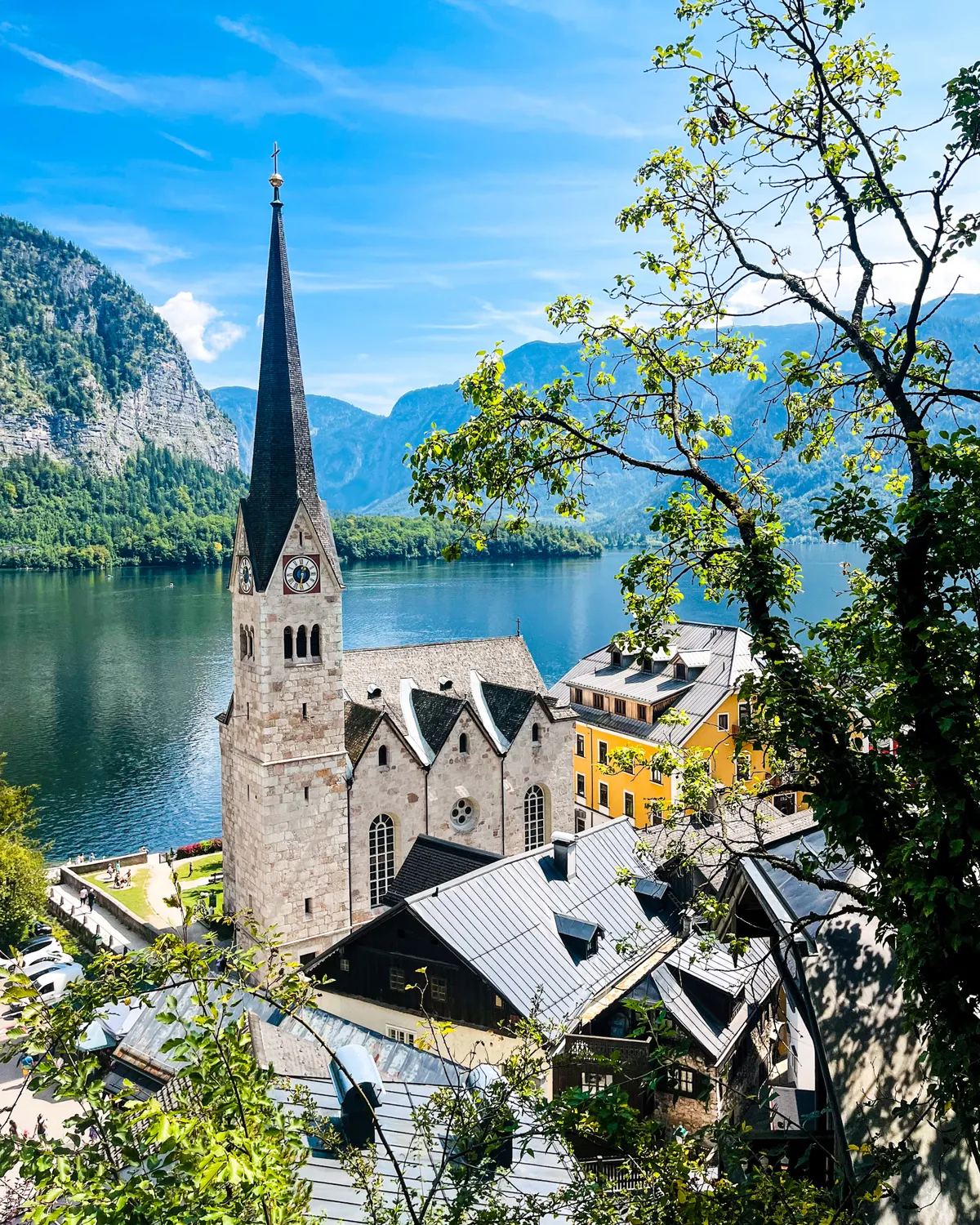
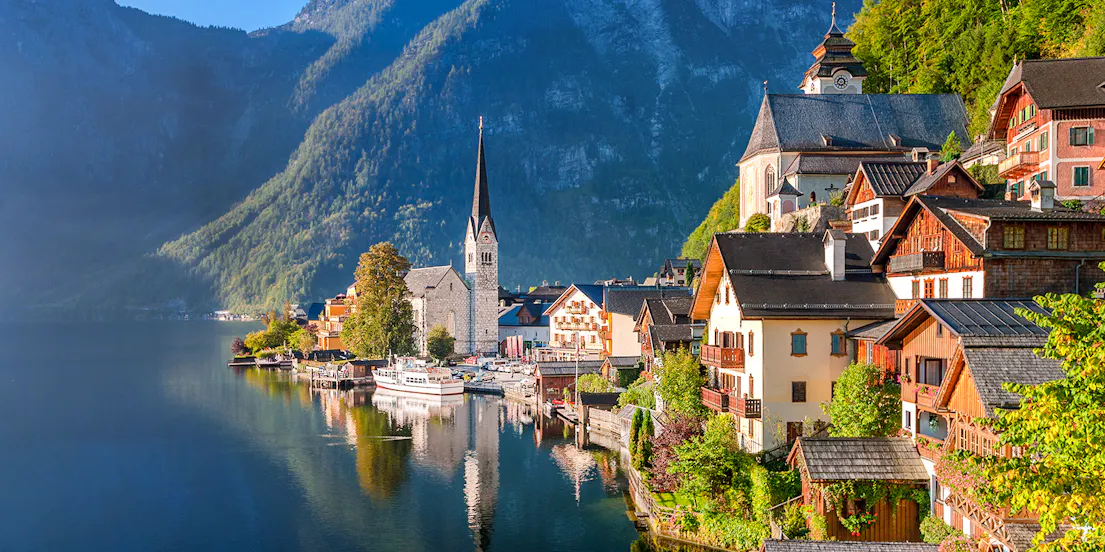
The striking spire of this church is the most recognizable landmark in the village skyline. It dates back to 1863 and offers a peaceful architectural contrast to the surrounding mountains.
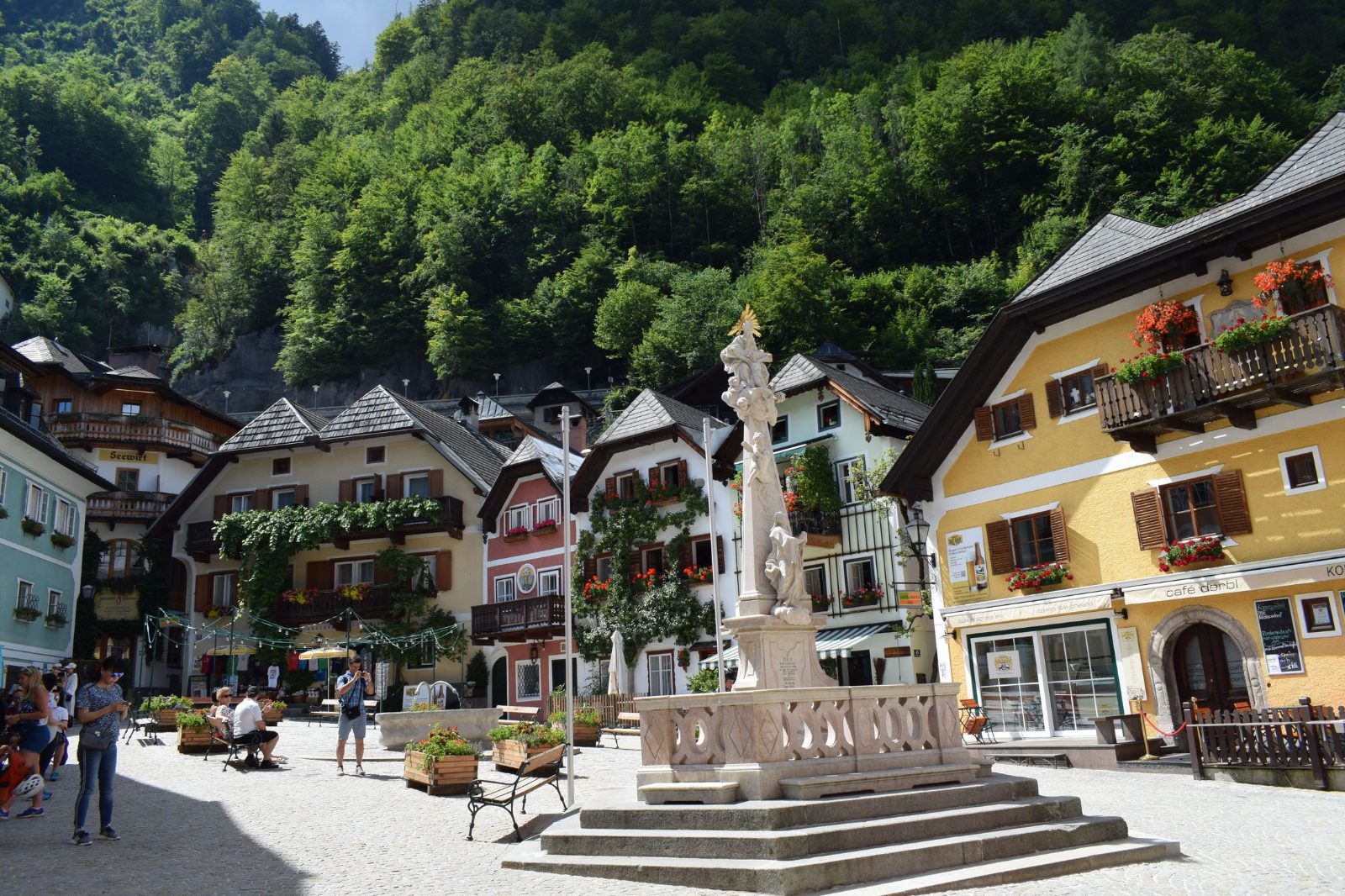
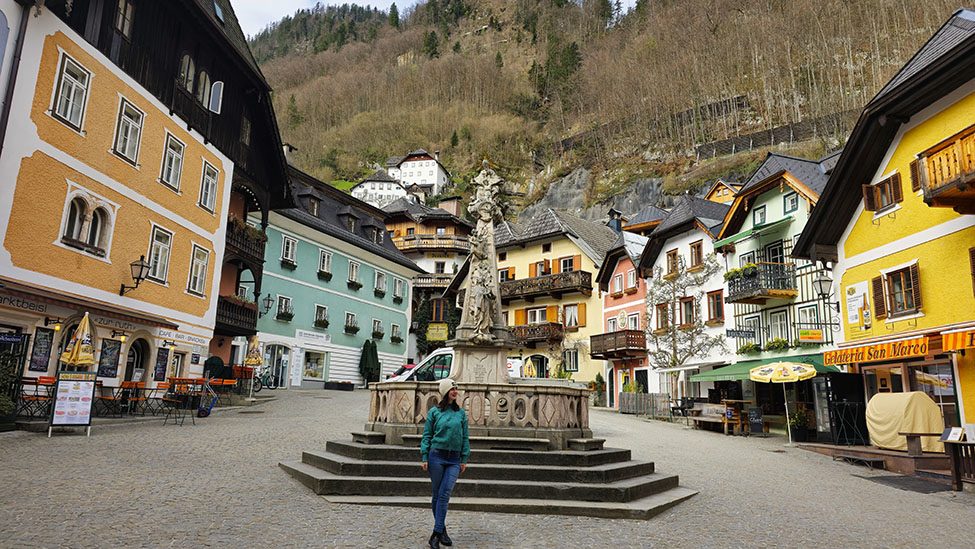
This central square is surrounded by traditional, colorful 16th-century buildings. It serves as the historic heart of the village and the main hub for local activity.
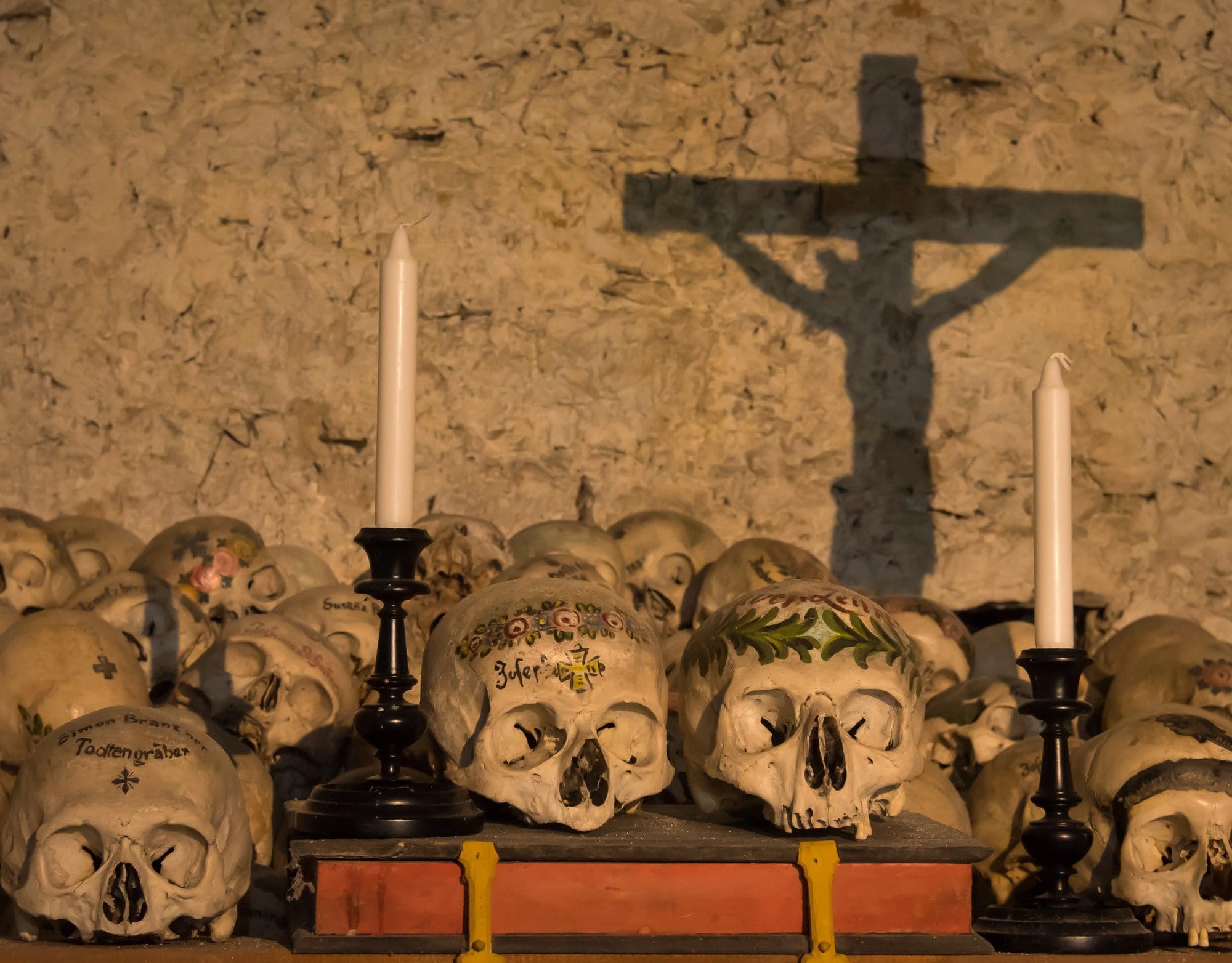
Located in the Chapel of St. Michael, this site houses over 1,200 decorated skulls. It is a unique historical site that displays the traditions of the local mining community.
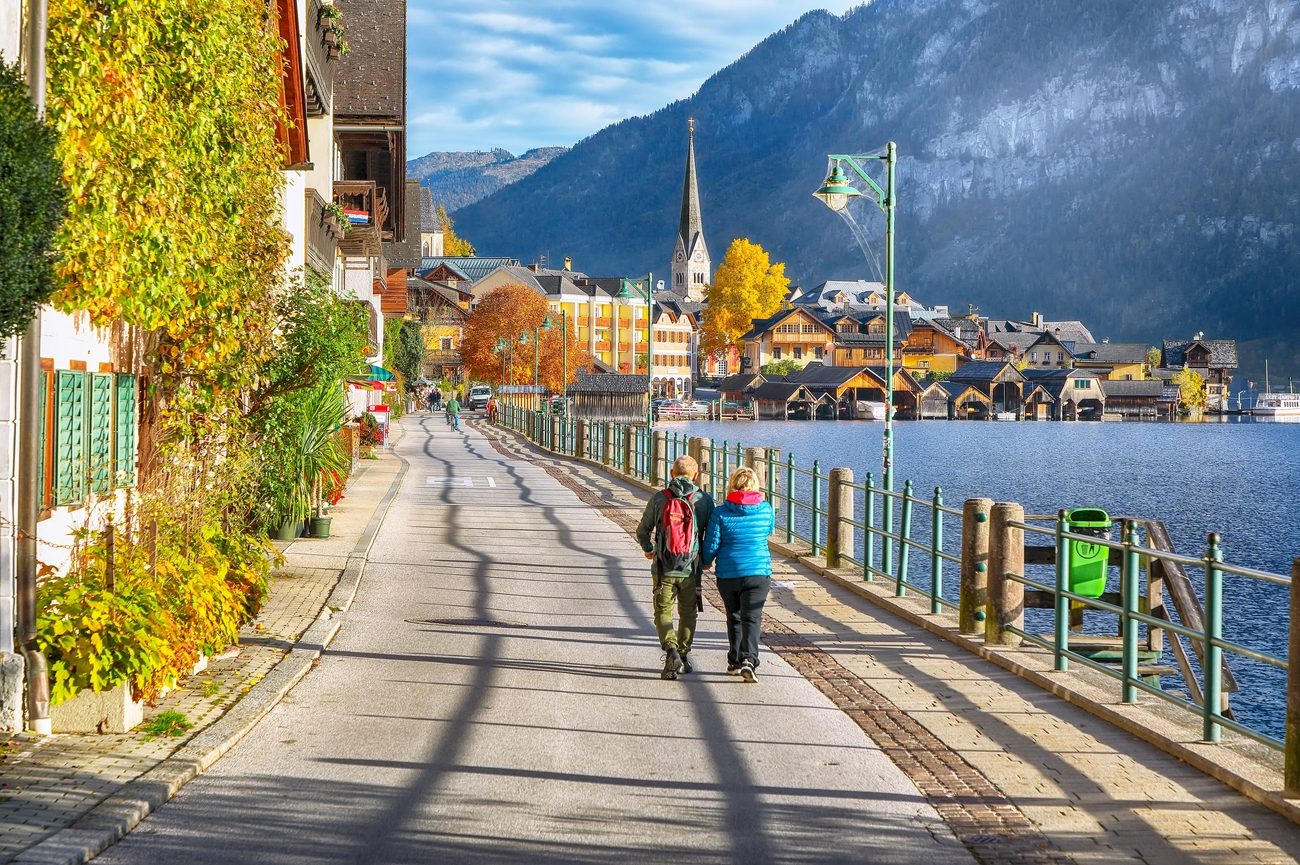
This pathway stretches along the water and provides the classic panoramic view of the village. It is roughly 1 kilometer long and offers constant opportunities for photography.
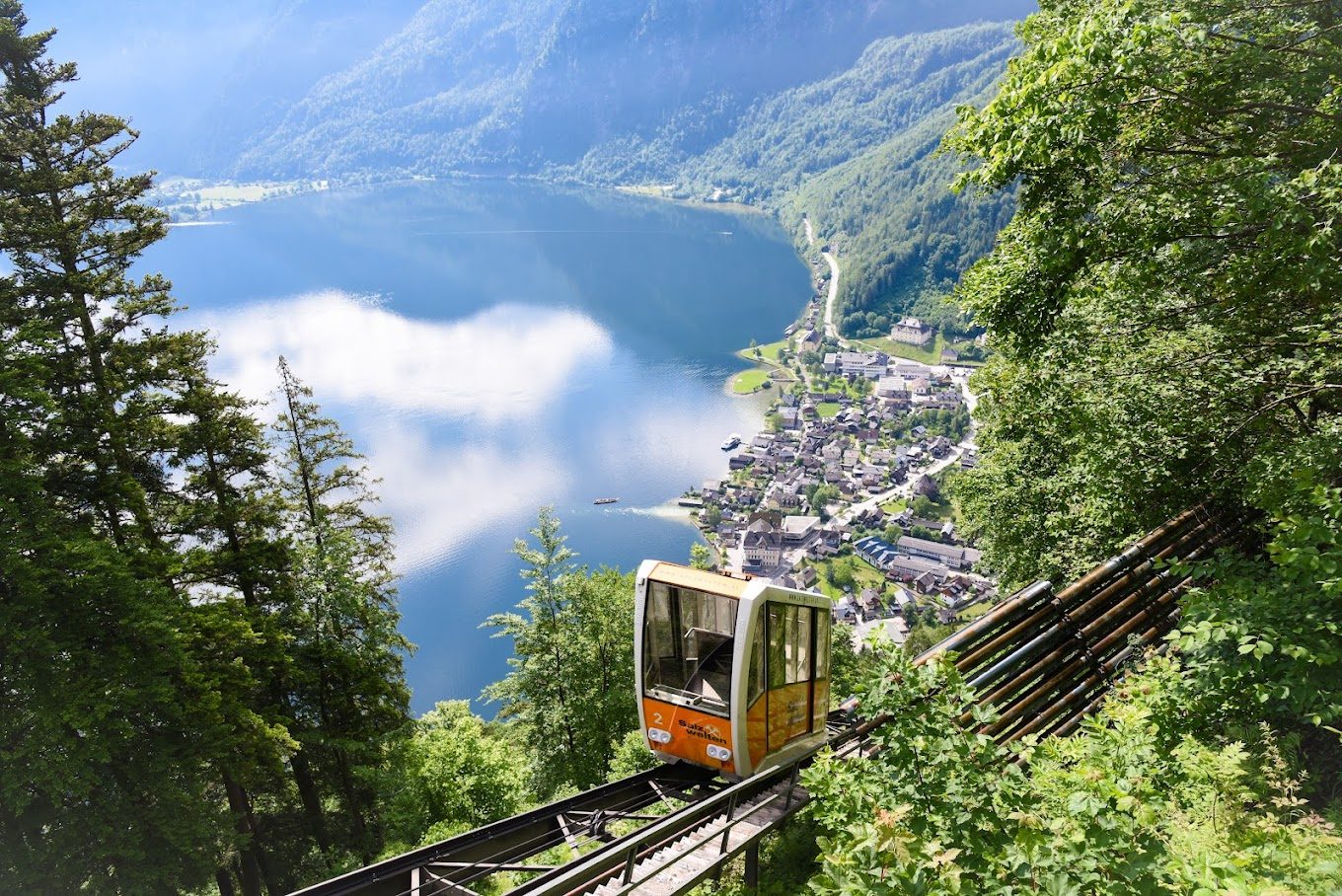
This transit system climbs 838 meters above sea level to reach the world's oldest salt mine. It offers views of the entire valley and lake below.
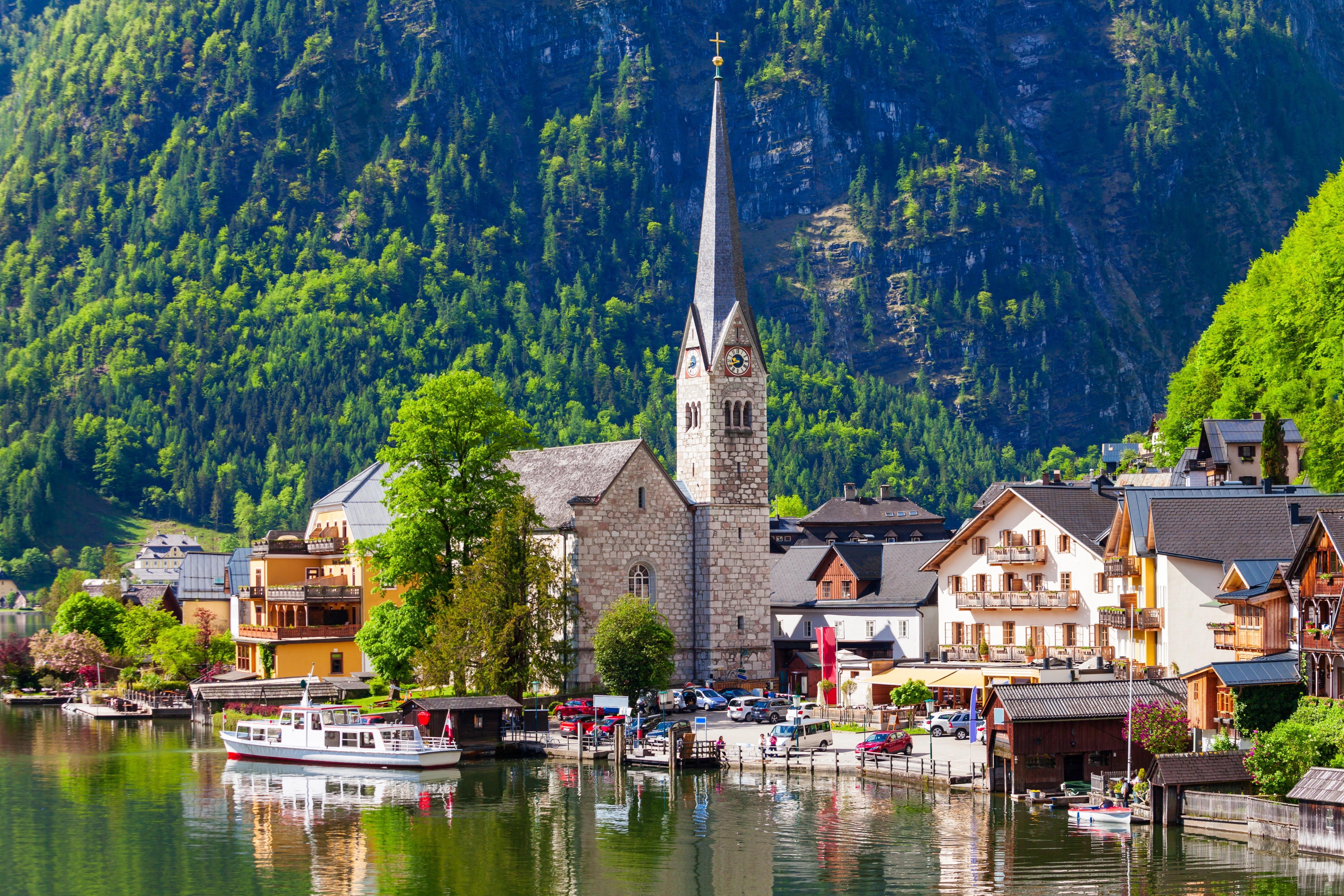
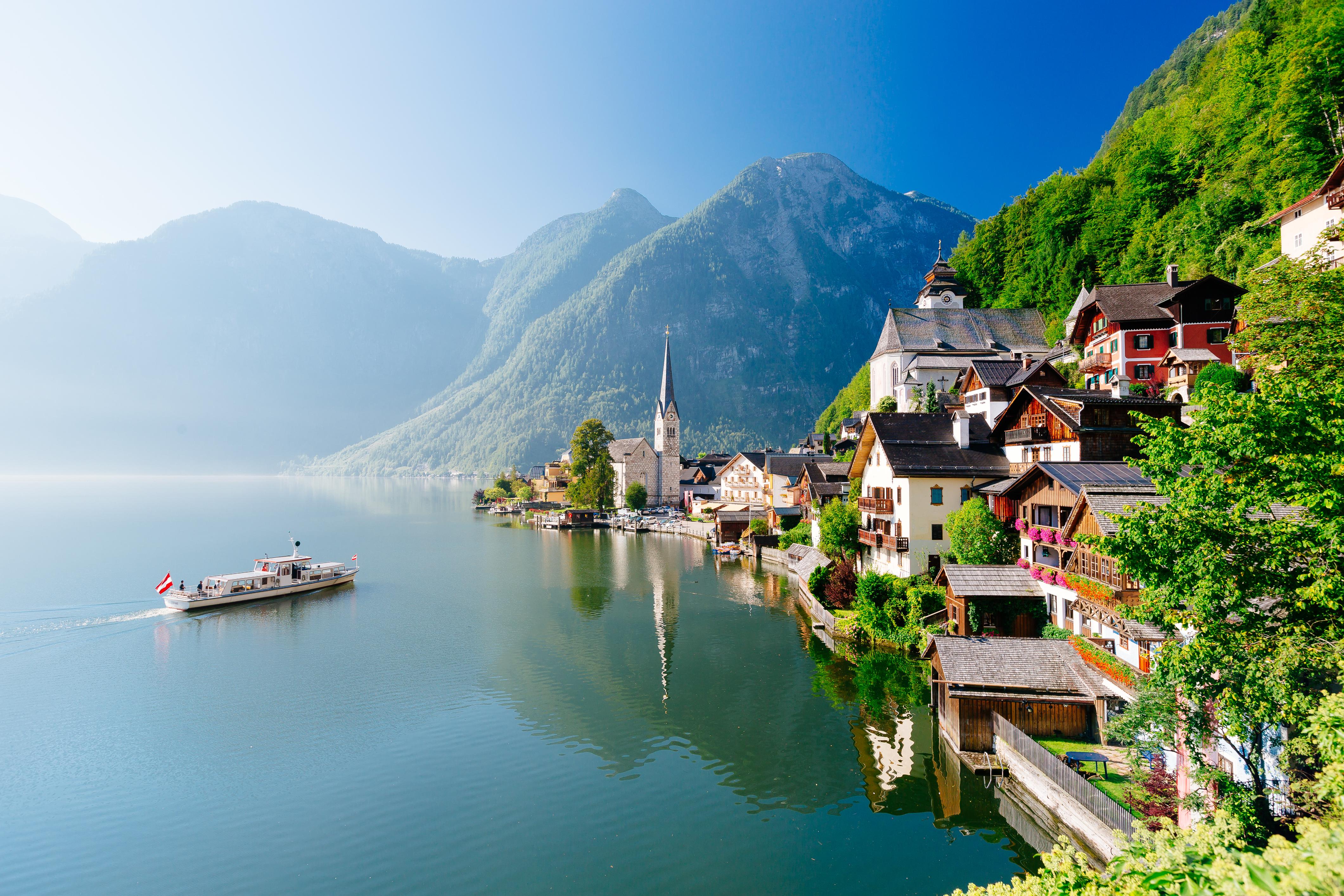
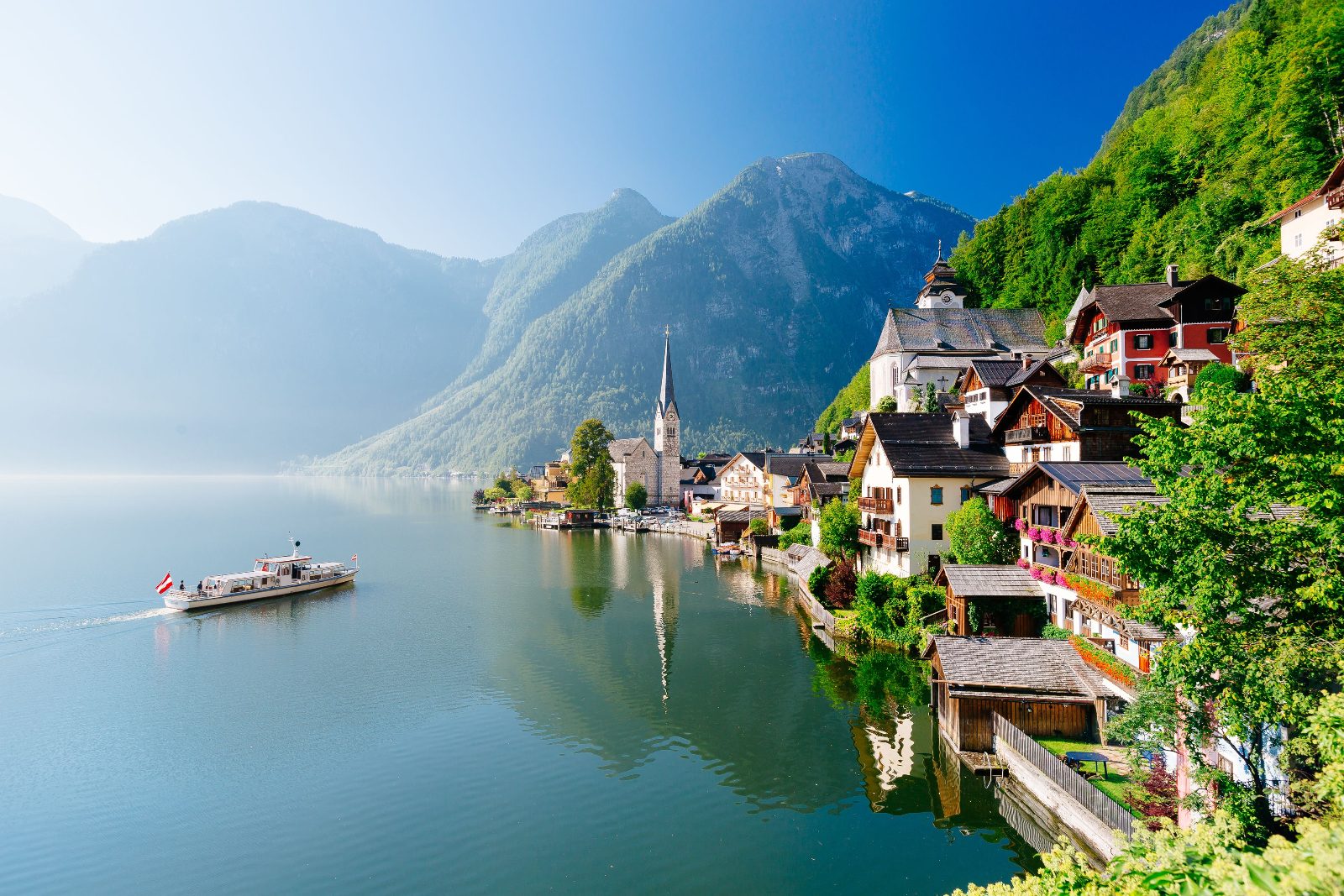
Your coach departs Vienna in the early morning, crossing the Danube plain and climbing into the foothills of the Northern Limestone Alps. After three and a half hours you round the southern shore of Hallstätter See and the village appears ahead, its pastel facades stacked against the rock face.
You disembark at the lake promenade and walk into Marktplatz, where the morning light reflects off the water and illuminates the frescoed gables of the Gasthof Zauner and the Market Fountain erected in 1750.
You follow the shoreline path to the Protestant church and then climb the covered stairway to Maria am Berg, passing the Beinhaus charnel house with its rows of flower-painted skulls arranged by family. From the church terrace you look down on the red rooftops and the green water 60 meters below, with the Dachstein glacier filling the southern horizon. If your hallstatt day tour from vienna tour includes the Salzwelten, you board the funicular for the 12-minute ascent to the mine entrance, descend through timber-shored galleries to the subterranean brine lake, and emerge onto the Skywalk platform suspended above the village. By mid-afternoon you walk the final stretch of the promenade, past the boathouses and the nets drying on wooden racks, before the coach departs for the return journey across the Salzkammergut.
All the details about your upcoming adventure in one place
Hallstatt clings to a limestone slope so steep that until 1890 the dead were ferried across the lake for burial because the village had no flat ground for a cemetery.
The 7,000-year settlement occupies a narrow ribbon between the Dachstein massif and Hallstätter See, and for millennia its wealth flowed from the salt mines tunneling five kilometers into the mountain above. By the Bronze Age, Hallstatt miners were extracting rock salt that preserved meat across Europe, and the Early Iron Age culture discovered in the alpine cemetery above the village gave its name to an entire archaeological period spanning 800 to 450 BCE.
Today Hallstatt holds UNESCO World Heritage status not for a single monument but for the continuous relationship between geology, industry, and settlement. The village stretches barely 500 meters along the western shore, its painted houses stacked on stone pilings driven into the lake bed. Marktplatz, the central square, measures only thirty meters across, yet it has anchored trade since the Middle Ages when salt barges departed for the Traun River and the Danube beyond. The Catholic parish church of Maria am Berg stands on a rocky terrace sixty meters above the water, its Gothic spire visible from the opposite shore, and its charnel house holds 1,200 painted skulls—a Beinhaus tradition born of the same space constraints that once forced lake burials.
The Salzwelten Hallstatt, the oldest salt mine open to visitors, operates in shafts that Bronze Age miners first opened with fire-setting and antler picks. Modern tours descend through hand-hewn galleries to an underground lake 400 meters inside the mountain, whererine still pools in chambers lit by modern floods. The funicular railway climbing from the village to the mine entrance was built in 1595 as a brine pipeline; it was converted to passenger use in the twentieth century and now delivers visitors to the Skywalk viewing platform at 360 meters elevation, cantilevered over the lake and the Dachstein peaks beyond. Hallstatt day tour from Vienna itineraries typically allocate three to four hours in the village, timed to avoid the midday coach wave that arrives between 11:00 and 14:00. Departures from the Austrian capital follow the A1 Westautobahn to Regau, then the regional road through Bad Ischl and the Salzkammergut lake district, a route that covers 290 kilometers in each direction and passes through the spa towns that served as summer retreats for the Habsburg court.

Hallstatt miners were extracting rock salt that preserved meat across Europe, and the Early Iron Age culture discovered in the alpine cemetery above the village gave its name to an entire archaeological period spanning 800 to 450 BCE.
Sturdy walking shoes are recommended for the steep, uneven cobblestone paths often included in a hallstatt day tour from vienna. Dress in layers as alpine weather conditions change quickly.
Travelers on a hallstatt day tour from vienna should keep bags compact for narrow lanes. Security personnel operate near the salt mine and funicular base stations.
Photography is permitted in public areas of the village, though visitors should respect residents' privacy near homes. Commercial photography during a hallstatt day tour from vienna requires advance municipal permits.
The village is stroller-accessible in central zones, though a hallstatt day tour from vienna often involves walking long distances. Public restrooms include baby-changing facilities.
While the main waterfront area is flat, many historic sections involve steep inclines and stairs. A hallstatt day tour from vienna might be challenging for those with limited mobility due to the terrain.
Visitors may bring personal snacks, but it is encouraged to support local bakeries. Alcohol consumption is restricted in specific public areas during a hallstatt day tour from vienna.
Opening Hours
00:00–23:59
Address
Hallstatt, 4830, Austria
Accessibility
Village streets are pedestrian-friendly
Best arrival
08:00–10:30
Storage
Public lockers available at bus/train hubs
Navigation
Interactive signage throughout historic center
Public transport · 2h 45m · Varies by operator
Take the train to Hallstatt station followed by the ferry across the lake.
Car · 3h 30m · Parking fees apply
Follow the A1 and B145 highways directly to the village entrance.
Cancellations for a hallstatt day tour from vienna must typically be made 24 to 48 hours in advance for a full refund. Note that the 0 EUR village entrance fee does not apply to private tours or pre-booked museum attractions.
Recommended time
4-6 hours
Planning a hallstatt day tour from vienna requires strategic timing to navigate the narrow alpine streets efficiently. Arriving during the 08:00–10:30 window allows you to explore the local salt mine and tranquil lakefront before the peak influx of visitor transport. While you might consider hallstatt day tour from vienna tours for logistics, independent travelers should allocate extra time if they intend to purchase hallstatt day tour from vienna tickets for specific attractions or visit the ossuary.
Crowd levels through the day
Weather · crowds · average price — dots go green to amber to red as each metric rises.
Mild temperatures and blossoming flora define this season. It provides a peaceful period for a hallstatt day tour from vienna before the summer rush.
Expect warm days and the highest visitor numbers. Arriving during the 08:00–10:30 window is essential for comfort.
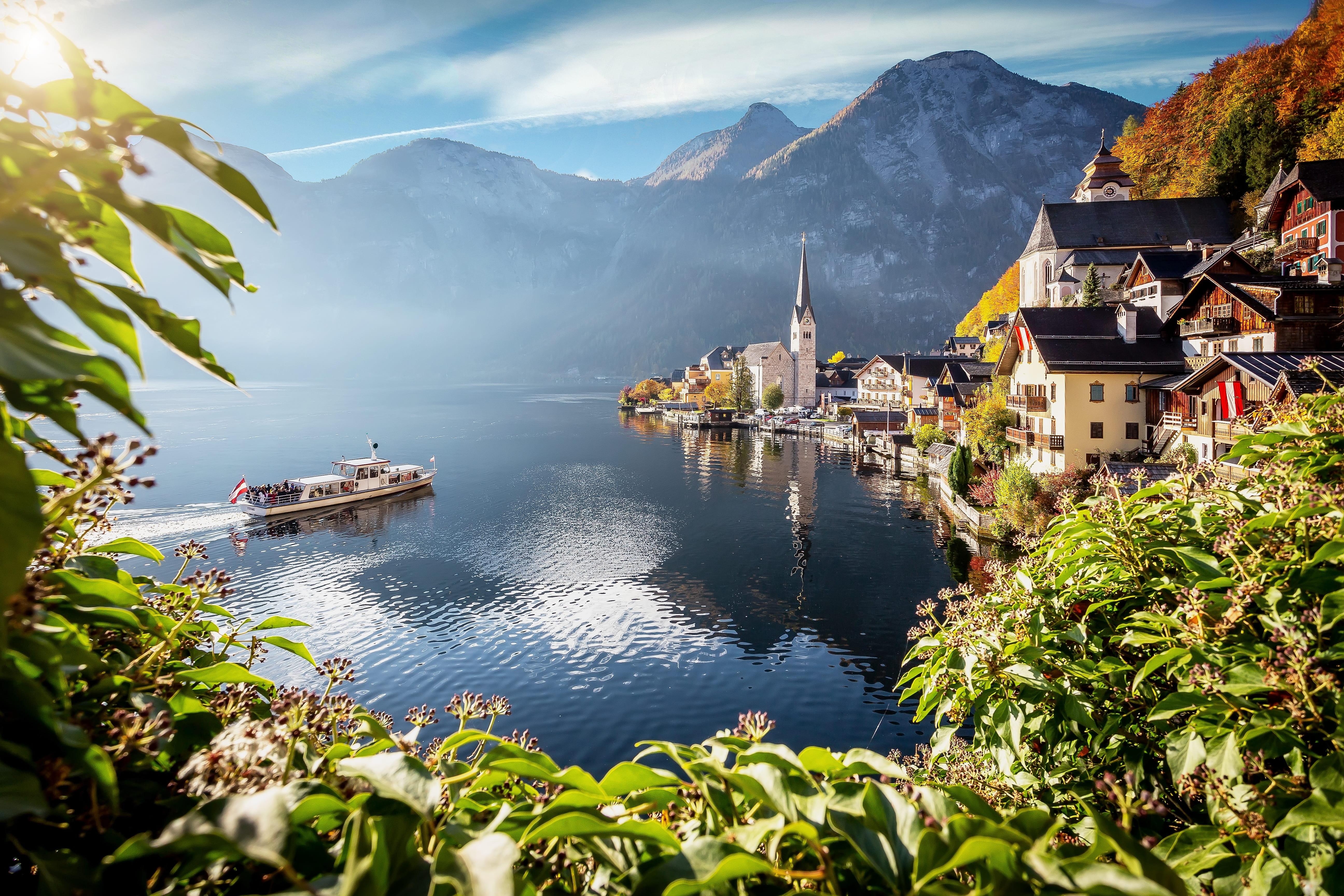
This season features vibrant foliage and cooler air. It is ideal for photography during a hallstatt day tour from vienna.
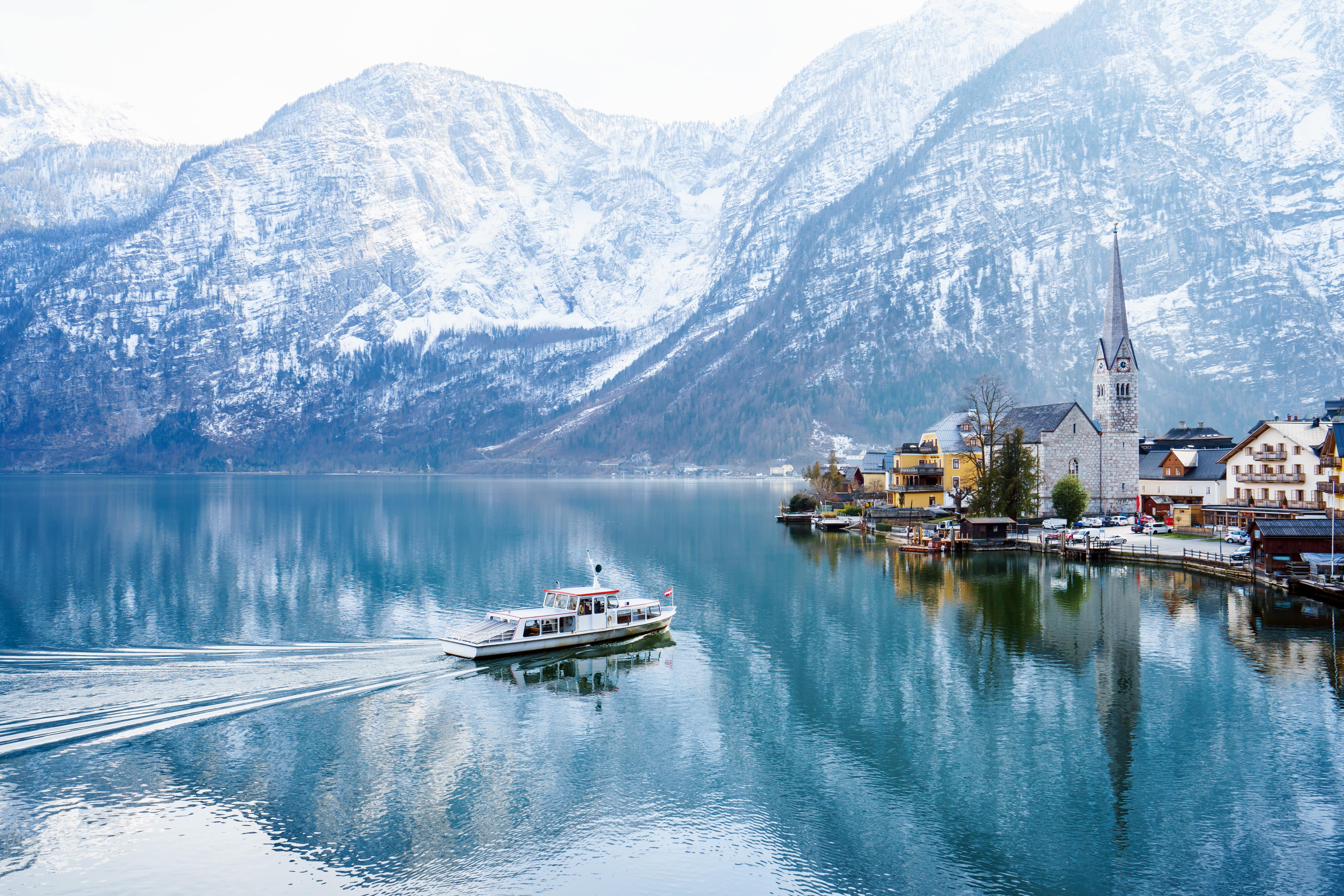
The village experiences heavy snowfall and temperatures near freezing. It offers a quiet, wintry atmosphere for those visiting Hallstatt.
Follow the 08:00–10:30 arrival recommendation to navigate the narrow streets peacefully. This window ensures a more intimate experience than visiting during midday peaks.
Utilize the early morning hours to photograph landmarks before the influx of day buses. Most visitors peak between 11:00 and 15:00.
Respect the local residents by staying on marked paths. Noise levels should be kept low in residential sectors of the village.
Wear shoes with good grip as the paths can be slippery in the autumn rain. Cobblestone surfaces require stability for comfortable walking.
Do not enter private properties marked with signage. Always use public restroom facilities located near the bus terminal.
Hallstatt's significance extends back seven millennia. Archaeological evidence places human settlement here as early as 5000 BCE, drawn by vast underground salt deposits. The mineral became the foundation of Europe's oldest industrial enterprise. Between 800 and 400 BCE, the region entered its most influential period. Bronze and iron production flourished alongside salt extraction, generating wealth that spread across the continent. The Hallstatt culture—defined by distinctive burial practices and metalwork—gave its name to an entire epoch of European prehistory. More than 2,000 graves were excavated from the hillside cemetery, revealing elaborate fibulae, ceremonial weapons, and trade goods from the Mediterranean. The medieval period saw Hallstatt evolve into a fortified mining village under the control of Salzburg's prince-archbishops. By the 13th century, systematic tunneling replaced surface extraction. The miners' guild regulated labor, maintained the shafts, and controlled access to the underground chambers. Fire-setting techniques—heating rock faces and dousing them with water—allowed crews to advance deeper into the mountain. The salt mine became one of the oldest continuously operated industrial sites in the world. UNESCO inscribed the Hallstatt-Dachstein Salzkammergut cultural landscape as a World Heritage Site in 1997, recognizing both the archaeological record and the living mining tradition. The designation drew international attention. Tourism surged. Daily visitor numbers began to exceed the village's population of 750. A replica Hallstatt was constructed in Guangdong, China, in 2012, amplifying global awareness. Local authorities responded with traffic restrictions and visitor quotas. Those booking a hallstatt day tour from vienna now arrive via regulated coach schedules. The salt mine remains operational, though its output serves pharmaceutical and industrial markets rather than food preservation. The ossuary in St. Michael's Chapel—holding more than 1,200 painted skulls—offers material evidence of centuries of settled life in this narrow lakeside corridor.
Neolithic communities establish permanent settlements near salt springs.
The Hallstatt culture dominates Central Europe, exporting salt, iron tools, and bronzework across the continent.
The first documented mining regulations are issued by the Salzburg archbishopric, formalizing extraction rights.
A catastrophic avalanche destroys parts of the village, killing miners and prompting reconstruction of the parish church.
Johann Georg Ramsauer begins systematic excavation of the prehistoric cemetery, uncovering graves that redefine European Iron Age chronology.
UNESCO designates Hallstatt-Dachstein Salzkammergut a World Heritage Site for its archaeological and industrial heritage.
A full-scale replica of Hallstatt is completed in Guangdong, China, intensifying global tourism pressure on the original village.
Local government introduces a daily bus quota system to manage the volume of hallstatt day tour from vienna arrivals and preserve village infrastructure.
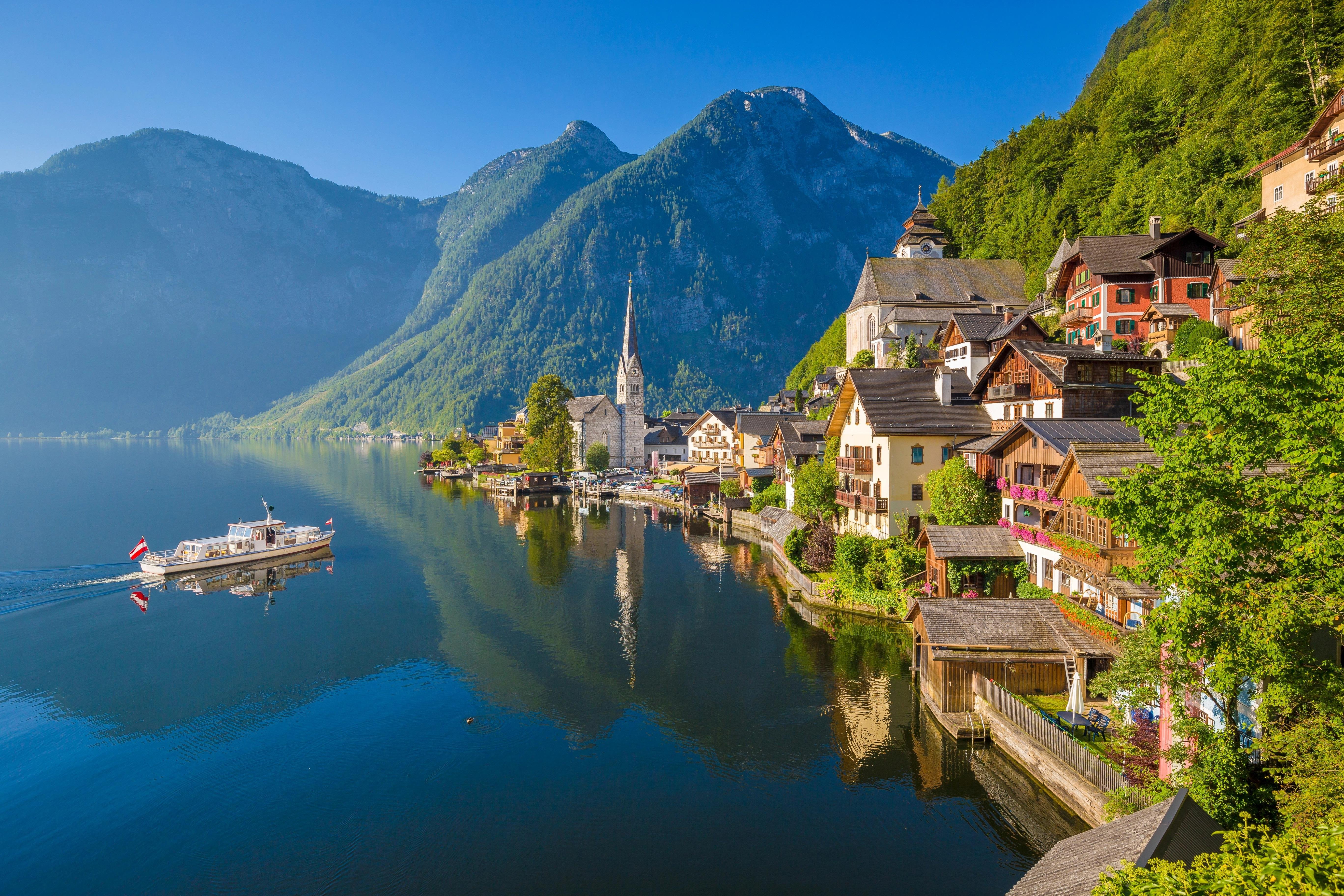
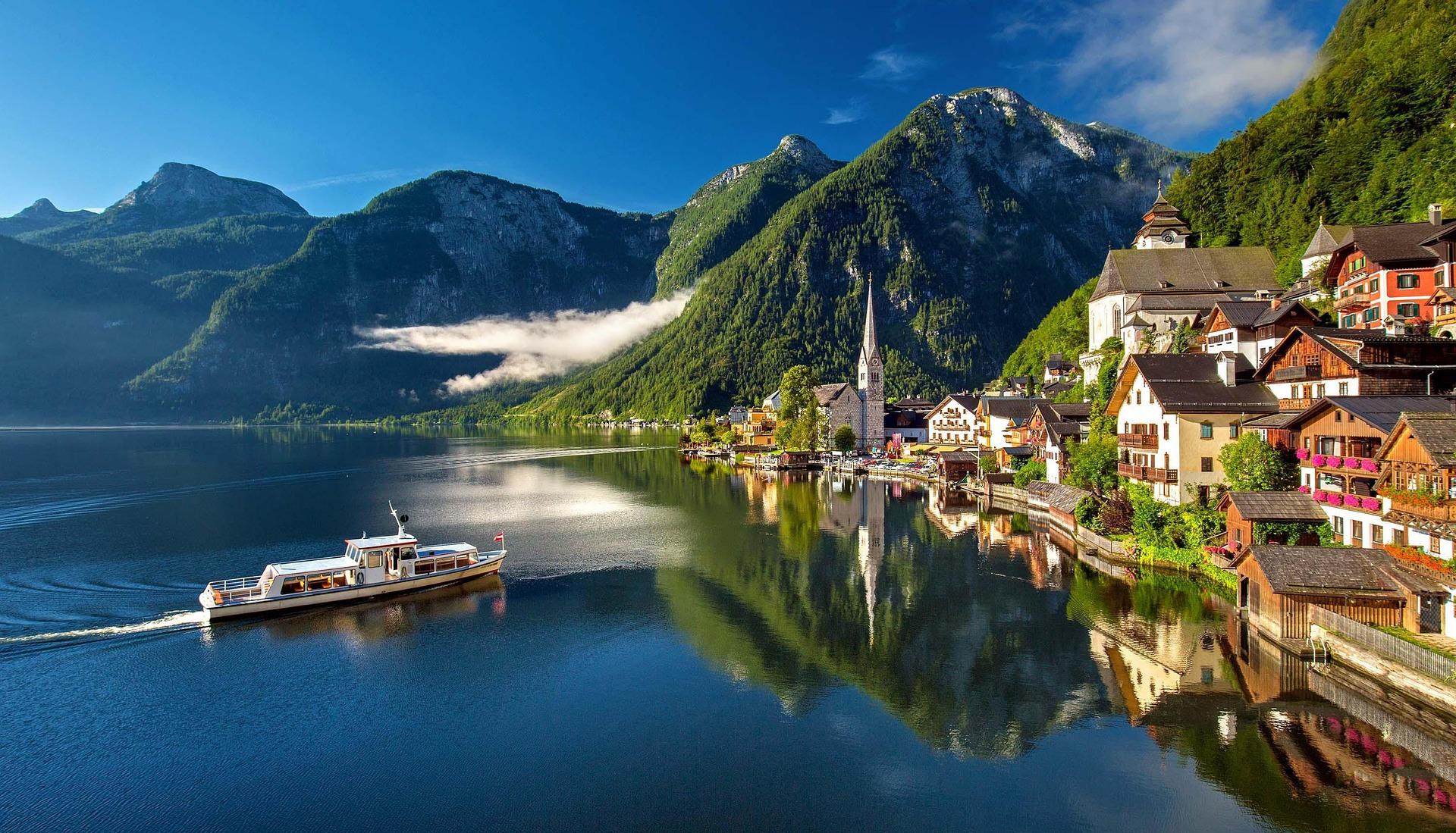
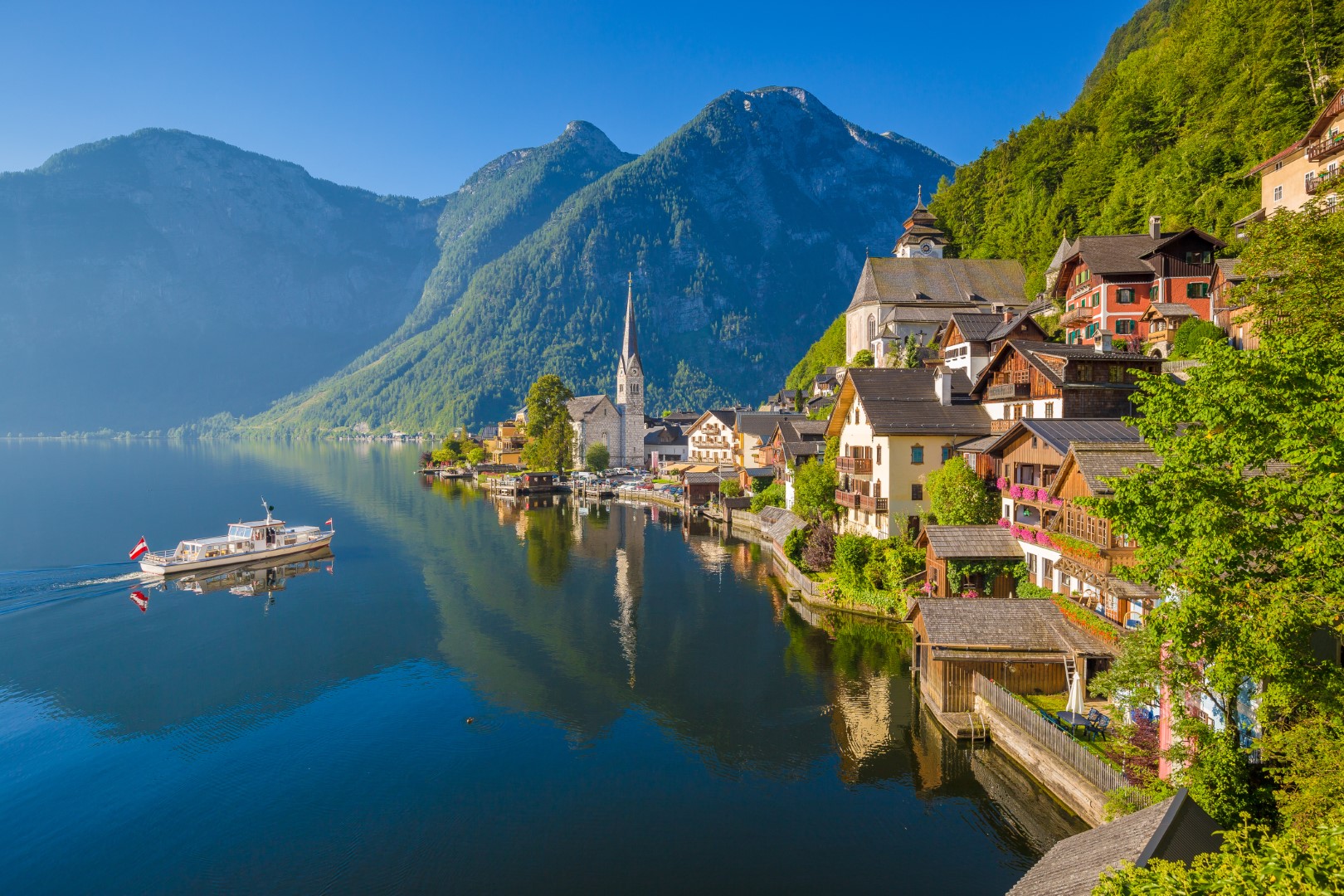
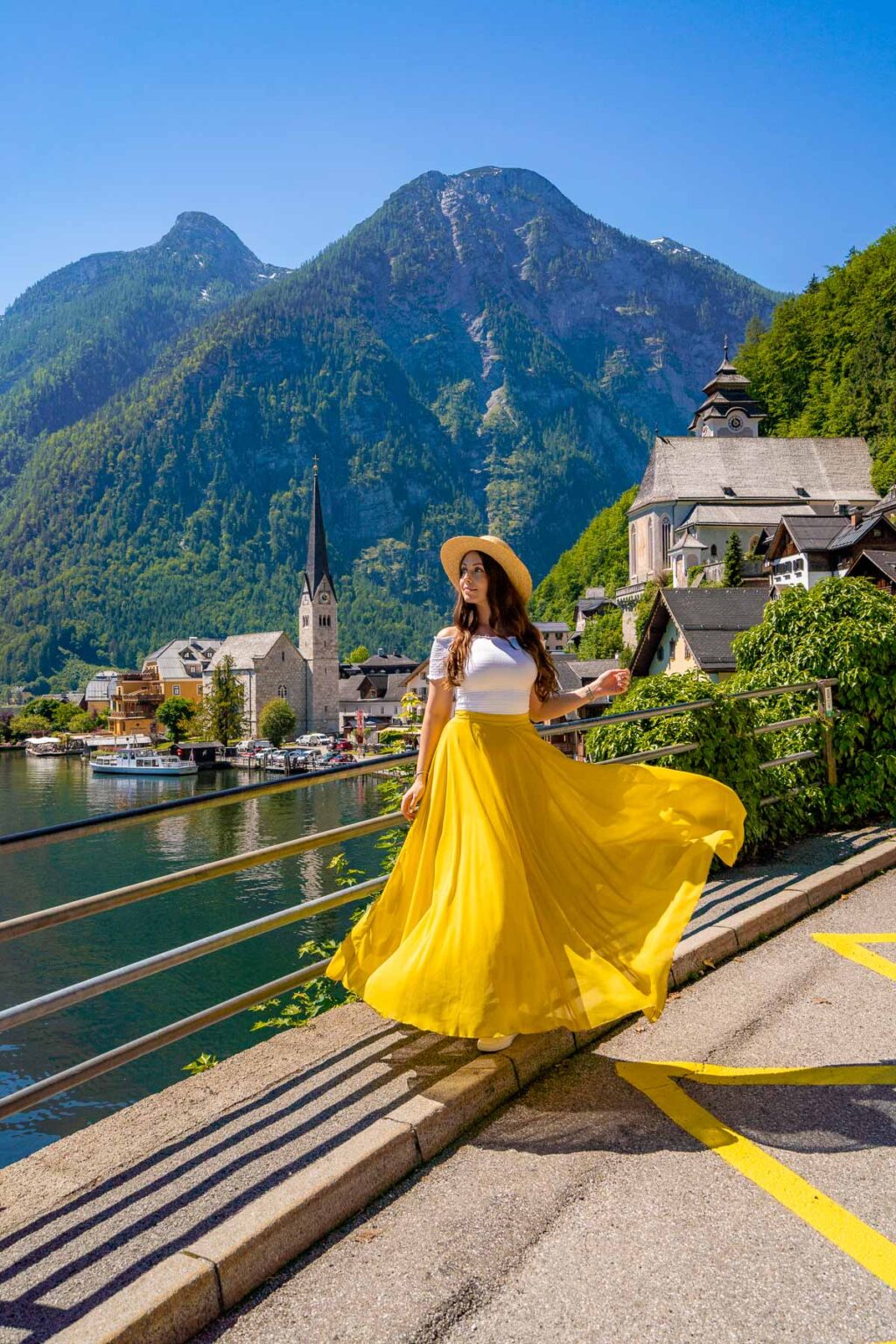
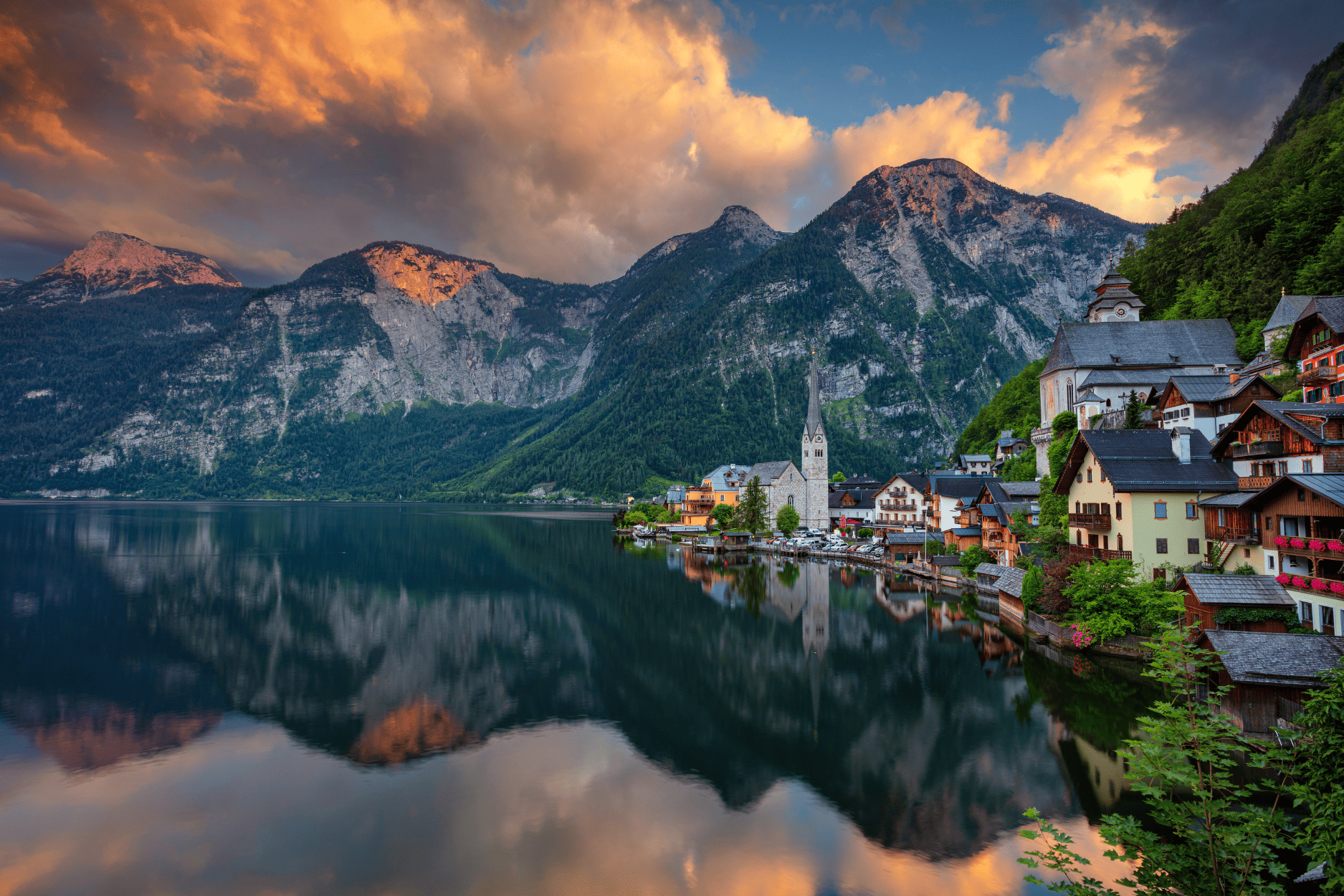
Position yourself on the Gosaumühlstraße path to capture the iconic alignment of the Lutheran Church spire, traditional Alpine houses, and the lake reflection. This is the primary subject for a hallstatt day tour from vienna.
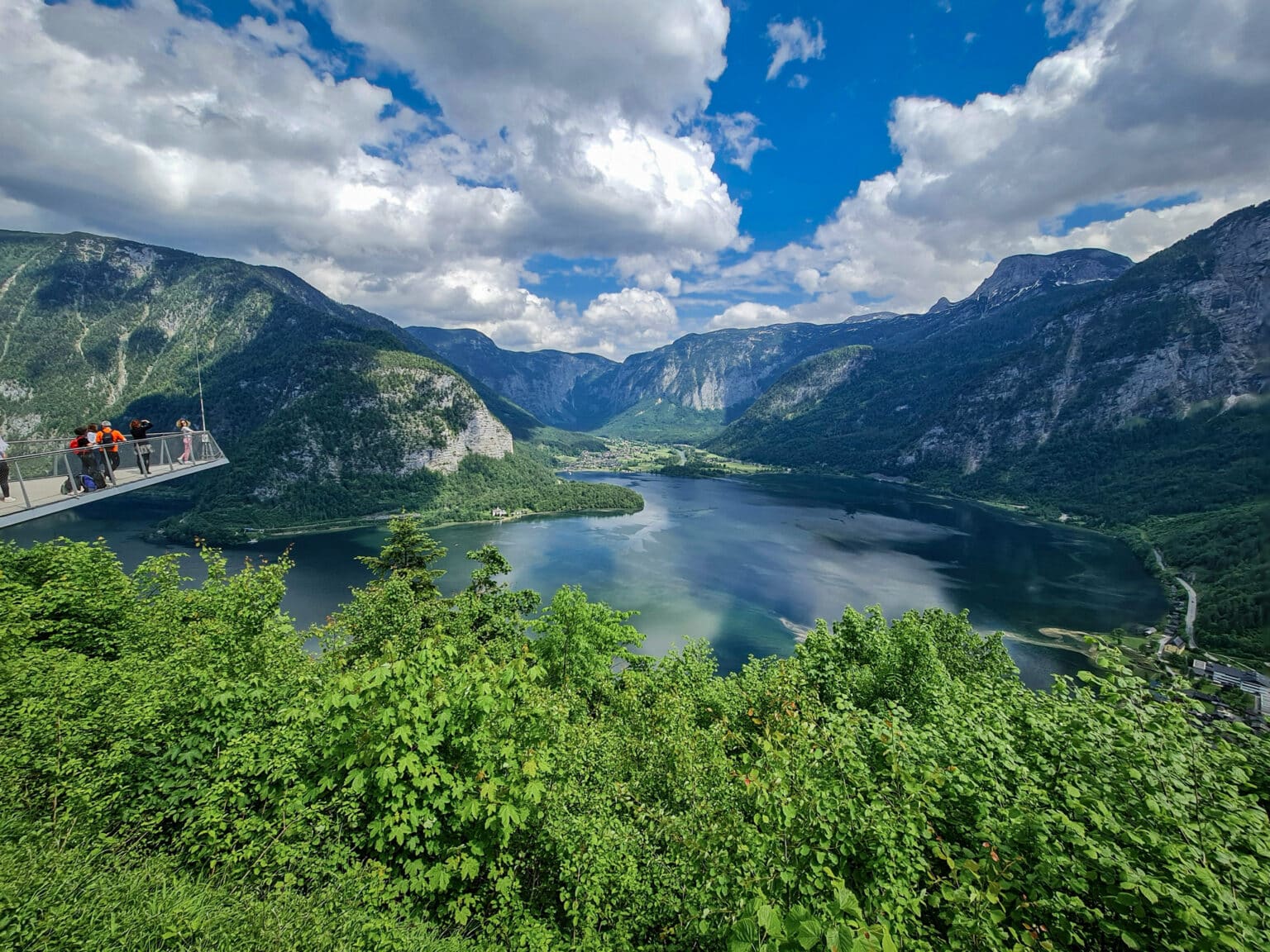
Located at the Salzberg platform, this observation deck offers a panoramic perspective of the Hallstatt-Dachstein UNESCO World Heritage landscape. Access requires taking the funicular to reach this elevation.
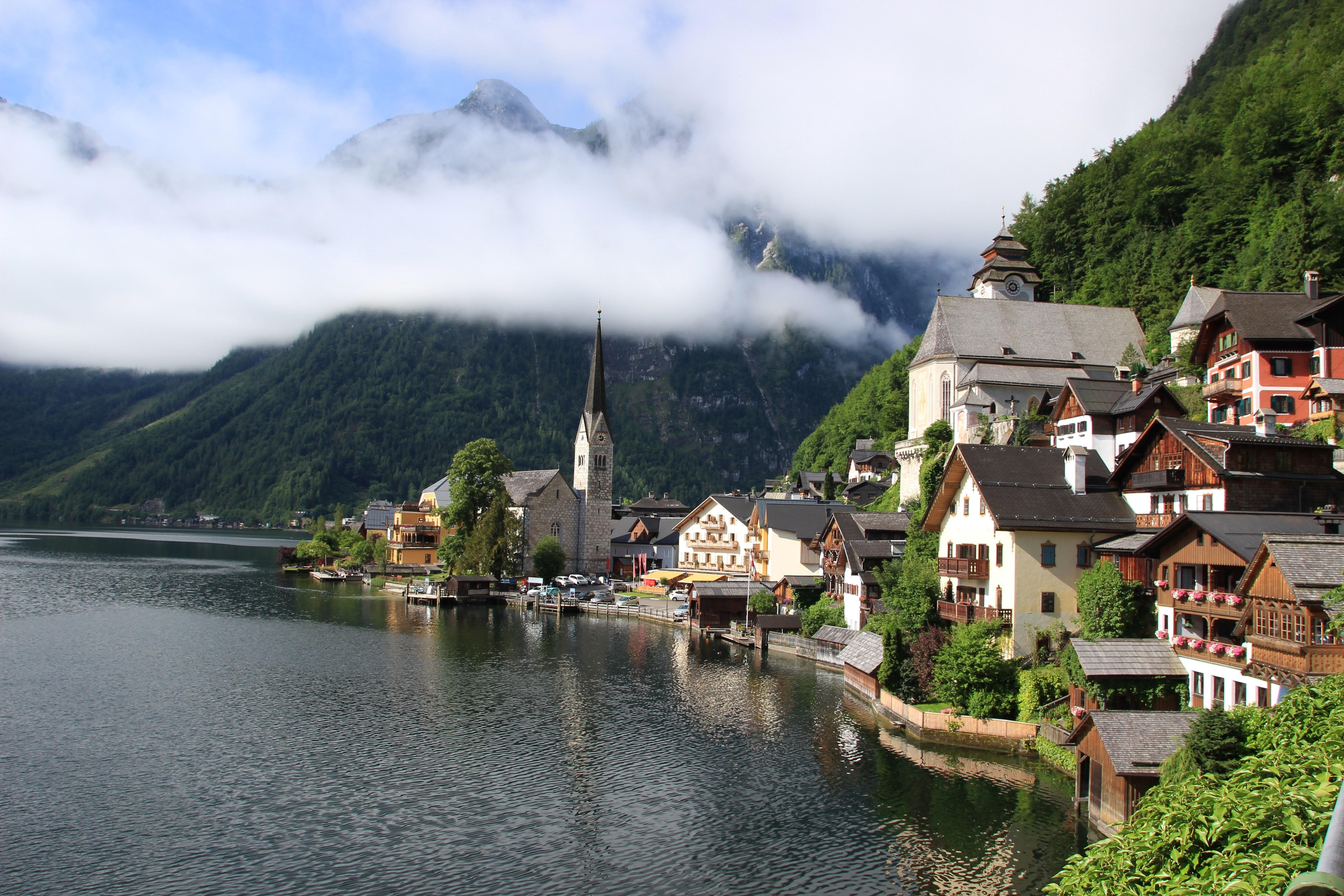
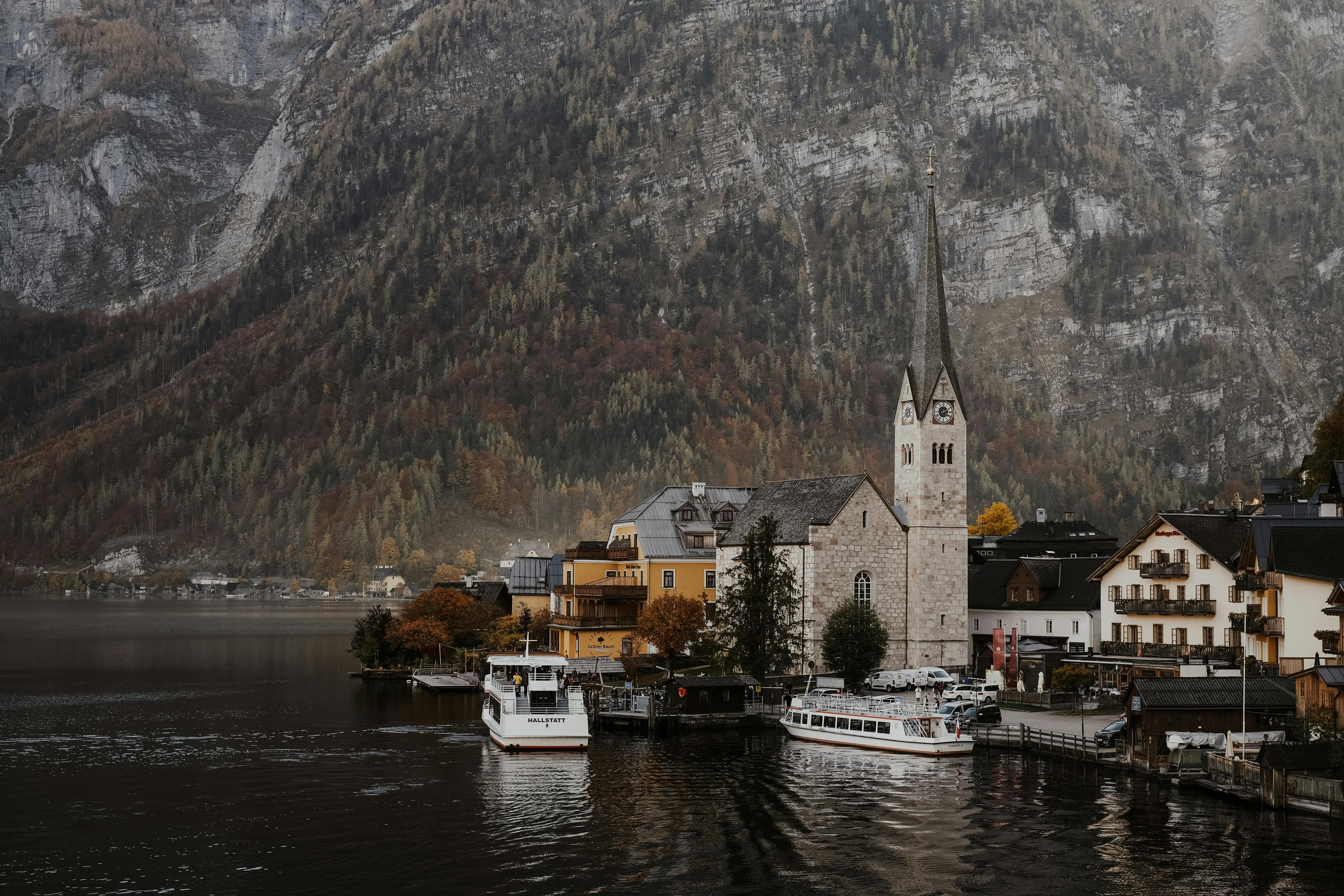
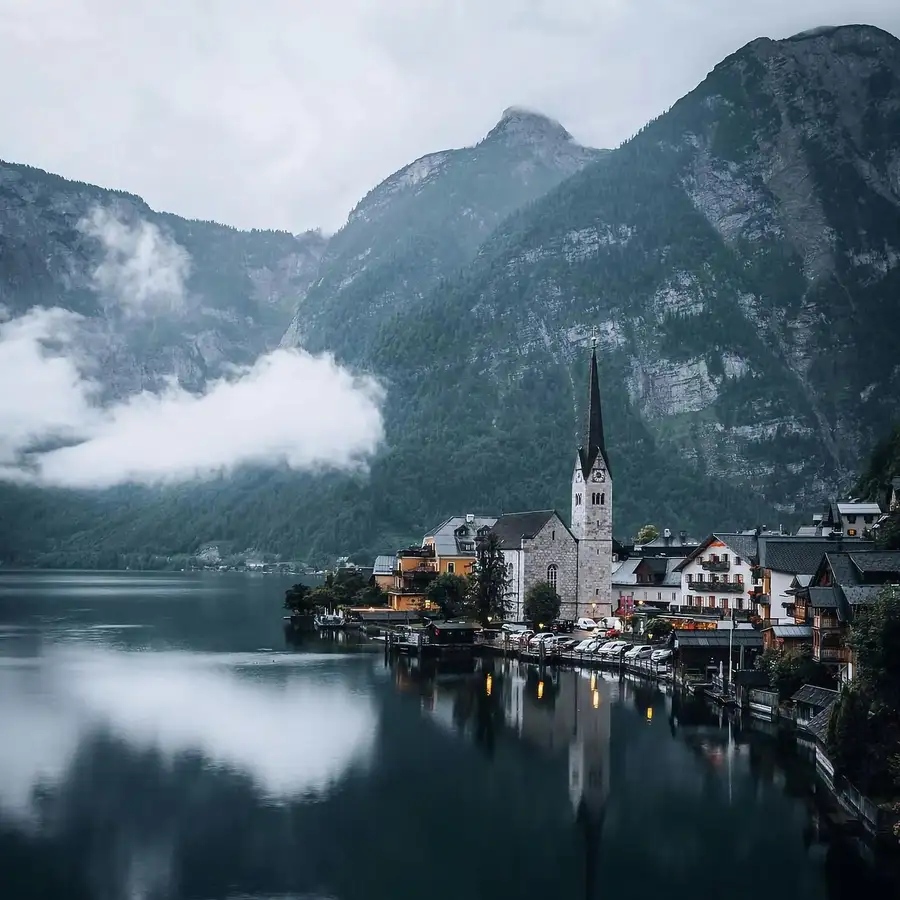
Focus on the architectural details of the Evangelical Church of Hallstatt from the lakefront promenade. The sharp spire creates a vertical contrast against the steep mountain backdrop.
Wander through the residential alleys to photograph wooden balconies adorned with autumn flowers and traditional timber structures. These quiet corridors provide authentic glimpses of local life away from the main square.
Capture the serene water surface and the surrounding limestone massif from the lower boat landing areas. Many visitors choose these tours to secure early access to the waterfront for clearer compositions.
Planning a hallstatt day tour from vienna requires careful coordination to ensure young travelers remain comfortable throughout the journey. Navigating this lakeside destination with children is manageable when focusing on its pedestrian-friendly layout and open-air environment.
The village paths are largely paved but can be crowded, so a compact travel stroller is more practical than a full-sized model. Be prepared to navigate some stairs if you choose to explore the higher residential areas or path networks during your hallstatt day tour from vienna tours.
Public restrooms are available near the center and the parking areas, with most locations offering basic baby-change stations. These facilities serve as essential stops for families utilizing various hallstatt day tour from vienna tickets for organized transport.
The best arrival window is 08:00–10:30, which allows families to explore before the peak influx of bus groups arrives. A structured hallstatt day tour from vienna tour helps keep children engaged without overextending their stamina in the midday heat or crowds.
The village features several casual bakeries and cafes where you can find quick snacks suitable for picky eaters. While there is no entrance fee of 0 EUR for the village, ensure you budget for local treats to keep energy levels high during your walk through these Austrian landmarks.
Finding a quality meal near a hallstatt day tour from vienna requires navigating the village center, where traditional Alpine flavors meet lakeside views. Visitors can secure hallstatt day tour from vienna tour refreshments at established eateries or local bakeries along the main promenade.
Located near the ferry dock, this venue offers fresh fish from the lake in a historic setting. It is popular during midday, so consider booking if you seek a seated lunch as part of your hallstatt day tour from vienna tickets experience.
Everything you need to know for your journey
The village is accessible 00:00–23:59 every day.
Yes, village entry is 0 EUR, though specific attractions like the salt mine have their own fees.
The best arrival window is 08:00–10:30 to avoid heavy crowds.
Yes, there are public lockers at the main transit hubs for visitors on a hallstatt day tour from vienna.
While main areas are flat, historic sections are steep and may be difficult for wheelchairs.
Mobile service is available, but please respect quiet zones during your hallstatt day tour from vienna.
Pets are allowed in public village areas, provided they are kept on a leash.
Pack comfortable walking shoes, a camera, and layers for changing weather on your hallstatt day tour from vienna.
You can reach Hallstatt by public transport via train and ferry, or by private car from Vienna.
Yes, various operators provide tickets for a hallstatt day tour from vienna online via our booking portal.
Notable for its iconic spire visible from the lake.
Features traditional 16th-century buildings and fountains.
Famous for its decorated skulls in the ossuary.
Provides the classic vista of the village mountains.
Centrally located in historic buildings.
Waterfront property with mountain views.
Authentic local stays throughout the village.
Join thousands of happy travelers who have discovered this incredible experience
Book Your Experience Now